
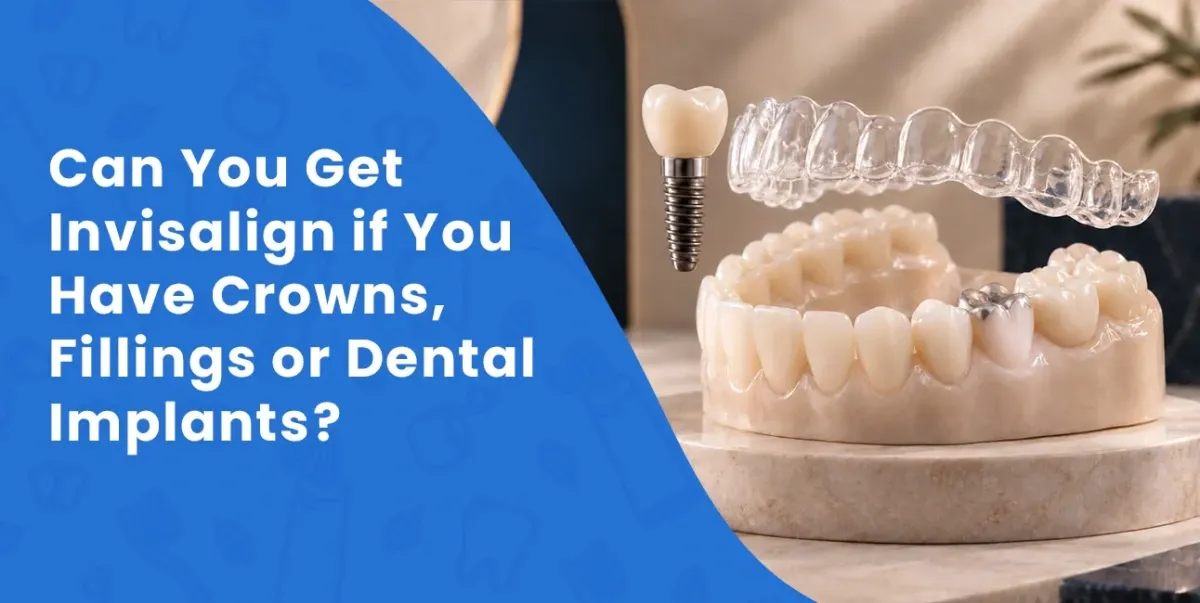
Can You Get Invisalign if You Have Crowns, Fillings or Dental Implants?
If you have already invested in crowns, fillings or dental implants, it is natural to wonder whether straightening your teeth could affect that dental work. Will the aligners fit? Could a crown come loose? Can an implant move along with the surrounding teeth?
Existing dental work does not automatically rule out Invisalign. Teeth with sound fillings or crowns can often be straightened. Dental implants require a different approach because the implant itself cannot move with orthodontic treatment. Your eligibility depends on the condition of your mouth and the tooth movements needed—not simply whether you have restorations.
For patients considering Invisalign in Sacramento at Stonebrook Dental, understanding these differences is a useful first step toward a realistic treatment plan.
How Crowns, Fillings and Implants Affect Invisalign
The most important distinction is what sits beneath the visible restoration.
Can You Get Invisalign With Crowns?
Often, yes. A dental crown covers and protects a tooth; it does not necessarily replace the tooth’s root. When that natural tooth and its supporting tissues are suitable for orthodontic movement, the crown can move along with it. The American Association of Orthodontists confirms that crowned teeth can be moved.
Before treatment, the dentist needs to assess more than the crown’s appearance. Useful questions include:
Is the crown secure, or does it feel loose?
Are there cracks, damaged edges or signs of decay?
Is the tooth comfortable when you bite?
Does the tooth have adequate gum and bone support?
Will the planned movement require an attachment on the crown?
Tell the dentist about recurring sensitivity, food catching around the crown or any previous need to recement it. These details can influence whether repairs should happen before aligners are made.
Can Invisalign Attachments Be Placed on Crowns?
In some cases, yes. Attachments are small, tooth-colored shapes bonded to selected teeth to help aligners grip and control movement. Their number and location depend on the treatment plan; not every tooth needs one.
Bonding to a crown requires consideration of its material. Ceramic surfaces do not behave exactly like natural enamel, and the dentist may need a different preparation and bonding approach.
Laboratory research supports the feasibility of bonding aligner attachments to ceramic restorations, while showing that the technique and materials affect bond strength. That evidence does not guarantee that every attachment will stay bonded throughout treatment.
Could Invisalign Loosen a Crown?
It is possible. Invisalign’s patient instructions identify dislodged restorations as a potential complication; a crown may need recementation or, sometimes, replacement. Having a crown does not mean this will happen, but the possibility deserves discussion before treatment.
Ask for a demonstration of aligner removal, especially around crowned teeth. If a crown starts moving, stop pulling on that area and contact your dentist for instructions.
Can You Get Invisalign With Fillings?
A filling usually does not prevent the natural tooth from moving. The more relevant issue is whether the restoration still seals and supports the tooth adequately.
A small, stable filling may require little additional planning. A large filling in a weakened tooth, a fractured restoration or decay around an old filling needs closer attention. Fillings are not lifetime restorations, and decay can develop at their edges.
Do not assume that all older fillings must be replaced before Invisalign. Ask which restorations need treatment and why. Decisions should reflect their condition, rather than age or appearance alone.
What if You Need a Filling During Treatment?
Let your dental team know promptly. A cavity should not be left untreated simply to avoid interrupting your aligner schedule.
Because aligners fit closely around tooth surfaces, it is sensible to coordinate any new filling or filling replacement with the clinician managing your Invisalign treatment. Depending on how much the tooth’s shape changes, the team may need to reassess the fit, adjust the treatment sequence or obtain new records.
Bring your current aligners to the restorative appointment. Before leaving, ask whether you should continue wearing that set and when to move to the next one.
Can You Get Invisalign With Dental Implants?
Potentially, yes—but treatment must work around the implant’s fixed position.
An integrated dental implant is anchored in the jawbone and cannot be repositioned like a natural tooth. Invisalign must not be used to move it. The manufacturer specifically warns against treatment plans that attempt implant movement.
An existing implant does not necessarily prevent movement of other teeth. The dentist must consider whether the desired alignment and bite can be achieved while leaving the implant where it is. Coordinating orthodontic and restorative planning is especially important when teeth are missing or implants are already present.
For example, a patient whose main concern is crowding away from an implant may have different options from someone whose desired result would require changing the implant’s position. This is why a general “yes” cannot replace an examination.
Should Invisalign Come Before a New Dental Implant?
If you are considering both treatments, discuss the sequence before the implant is placed.
Orthodontic treatment may first be used to create or preserve appropriate space for a replacement tooth. Aligning the remaining teeth can also help establish a suitable bite before restorative work is completed.
The practical implication is that implant placement often follows the necessary tooth movement. However, the sequence is individual: existing spacing, planned movements, healing and restorative needs all matter.
Tell Stonebrook Dental about any planned dental implant treatment at your Invisalign consultation so both goals can be considered together.
What Needs to Be Checked Before Treatment?
A consultation should establish whether tooth movement is appropriate and whether existing dental work needs attention first.
Be prepared to discuss:
Restoration history: Crowns, fillings, implants, root canals and previous repairs.
Current symptoms: Pain when chewing, sensitivity, bleeding gums or loose dental work.
Oral health: Any untreated cavities or gum disease.
Treatment goals: Which teeth bother you and whether your bite feels uncomfortable.
Upcoming dental work: Planned crowns, implants or other restorations.
Active periodontal disease must be addressed before Invisalign treatment. Previously treated and controlled periodontal disease does not automatically exclude treatment, but suitability requires clinical judgment.
Your assessment may include dental records, imaging and a scan or impressions. Invisalign planning uses a model of your teeth to map the intended movements, followed by appointments to monitor fit and progress.
Before committing, ask: “Which teeth will move, which will stay in place, and could any of my restorations need further work?”
Caring for Dental Restorations During Invisalign
Good daily care remains essential throughout treatment. Pay particular attention to the edges of fillings and crowns, where plaque can accumulate.
Brush twice daily with fluoride toothpaste and clean between teeth every day. Ask your dental team to demonstrate cleaning around an implant or any area that is difficult to reach. Continue regular dental examinations and professional cleanings.
Remove aligners for meals and drinks other than plain cool or lukewarm water. Clean your teeth before reinserting them, and follow the prescribed wear schedule. Report sharp pain, a loose restoration or significant fit problems promptly; do not force an aligner into place.
Frequently Asked Questions
Can I Have Invisalign After a Root Canal?
A history of root canal treatment does not automatically prevent orthodontic treatment. The tooth’s condition and suitability for movement still need evaluation, including any crown protecting it.
Does Having Several Crowns Automatically Mean I Need Braces?
No. The number of crowns alone does not determine which appliance is appropriate. Their location, condition, attachment requirements and the movements needed are more useful considerations. Ask the dentist to explain why the recommended approach fits your particular case.
Will Existing Dental Work Make Invisalign More Expensive?
There is no universal surcharge simply for having a filling, crown or implant. Invisalign fees depend on the complexity of treatment and the aligners needed. Any necessary restoration repairs or replacements may involve separate fees, so request an itemized estimate that distinguishes orthodontic treatment from other dental work.
Will I Need a Retainer if I Have an Implant?
If natural teeth have been moved, retention still matters. An implant does not hold all surrounding teeth in their new positions. Retainers are part of maintaining the result after Invisalign; your dentist will prescribe the appropriate design and wear schedule.
Should I Replace a Crown Before Starting Invisalign?
Ask whether replacement is needed for health or structural reasons, or is primarily an appearance preference. A failing restoration may need attention before tooth movement, while the timing of elective replacement can be coordinated with the intended final tooth positions. Avoid booking either procedure without discussing the overall sequence.
Discuss Your Options With Stonebrook Dental
You do not need a mouth free of dental work to ask about Invisalign. You need a plan that accounts for the teeth, restorations and implants you already have.
Stonebrook Dental offers Invisalign alongside crown, filling and dental implant services in Sacramento. Bring your concerns—and any plans for future dental work—to an appointment so you can discuss treatment order, realistic goals and the care your existing restorations may need. Explore Stonebrook Dental’s services.
Contact Stonebrook Dental to schedule an Invisalign consultation.