
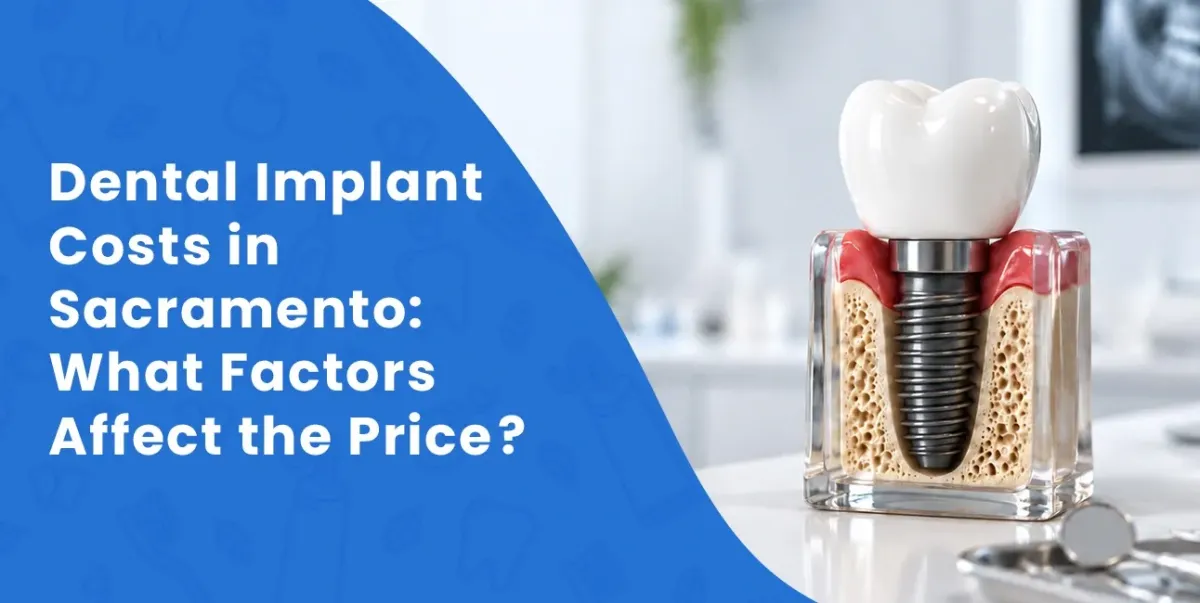
Dental Implant Costs in Sacramento: What Factors Affect the Price?
When you’re researching dental implants, one of the first questions is usually straightforward: “How much will it cost to replace my missing tooth?” Finding a clear answer can be harder than expected. One advertisement may quote the implant alone, while another includes the crown, imaging, and other parts of treatment.
Dental implant costs in Sacramento depend on how many teeth need replacement, the restoration selected, the condition of your jawbone and gums, and what the treatment estimate includes. Insurance benefits and financing terms also affect what you pay out of pocket.
Understanding these differences can help you compare estimates and plan for treatment with fewer surprises.
How Much Do Dental Implants Cost in Sacramento?
There is no single price that applies to every patient. A straightforward single-tooth replacement and a full-arch restoration involve different amounts of surgery, materials, and laboratory work.
For a local reference, Stonebrook Dental’s website lists these starting prices:
These are Stonebrook Dental’s advertised starting prices, checked September 9, 2026—not Sacramento-wide averages or guaranteed treatment totals. The practice notes that additional procedures may affect the final price. Its single-implant package lists consultation, digital imaging, implant placement, and the abutment and custom crown among the included services. Confirm current pricing, eligibility, and exclusions directly with the office. Stonebrook Dental’s implant services and pricing
For any full-arch estimate, ask whether the price covers the upper jaw, lower jaw, or both. Also confirm whether it includes the final teeth as well as any temporary restoration.
What Does a Dental Implant Estimate Include?
A single implant-supported tooth generally has three main components:
Implant body: The post placed in the jawbone to support the replacement tooth.
Abutment: The connector between the implant and restoration.
Crown: The visible replacement tooth.
An advertised “implant price” may describe only the implanted post and its placement. Ask whether the abutment and crown are included before comparing it with another quote. The FDA explains these components in its patient guide to implant systems.
A useful written estimate separates preparatory care, surgery, replacement teeth, and follow-up services. That makes it easier to see both the expected total and any expenses that remain uncertain.
Major Factors That Affect Dental Implant Costs
1. The Number of Implants Needed
Replacing more teeth usually expands the treatment plan, but the number of missing teeth does not always equal the number of implants required.
Depending on your needs, treatment may involve:
One implant supporting a single crown.
Multiple implants supporting a bridge.
Implants retaining a removable denture.
Several implants supporting a fixed full-arch restoration.
The American Dental Association explains that custom bridges or dentures can replace multiple teeth using implants for support.
Ask your dentist to explain how many implants are recommended, which teeth they will support, and why that arrangement suits your mouth. Multiplying a single-implant advertisement by the number of missing teeth will not necessarily produce a realistic estimate.
2. Implant Type and Restoration Design
“Dental implants” describes several treatment approaches. A removable implant-retained denture and a fixed full-arch bridge differ in their construction, daily cleaning, maintenance, and price.
When comparing options, clarify:
Can you remove the teeth yourself for cleaning?
How many implants support the restoration?
What material will the final teeth use?
Are temporary teeth included?
What repairs or component replacements might be needed later?
Treatments marketed as “same-day teeth” also need careful explanation. In suitable cases, a temporary restoration may be provided early, but healing and the final restoration can still take additional time. Ask which stage the advertised price covers.
3. Crowns, Abutments, and Materials
The replacement tooth is a substantial part of the treatment—not simply a finishing detail.
Ask whether the estimate specifies a standard or custom abutment, the crown material, laboratory charges, and any proposed material upgrades. For full-arch treatment, request the same information about the bridge or denture.
It also helps to distinguish the implant material from the material of the replacement teeth. Most implant systems use titanium or zirconium oxide, according to the FDA. A zirconia crown does not necessarily mean the implant beneath it is zirconia.
A higher-priced material is not automatically the best choice for every patient. Ask what the proposed option means for appearance, repairability, and your treatment needs.
4. Bone Grafting and Sinus Augmentation
Dental implants need sufficient bone for support. When bone volume is inadequate, a dentist may recommend grafting before or during implant placement.
A small graft and a larger ridge reconstruction involve different amounts of treatment. The American Academy of Periodontology explains that ridge modification builds up deficient bone and may require a separate healing period before implant placement.
For some upper back teeth, insufficient bone near the sinus may require a sinus lift, also called sinus augmentation. This adds a separate procedure to consider when reviewing costs and timing.
Ask whether a graft estimate includes the graft material, any membrane, surgery, and follow-up visits. Not every implant patient needs grafting; that decision requires an examination and appropriate imaging.
5. Tooth Extractions and Preparatory Treatment
If a damaged tooth is still present, removal may be part of the implant plan. A straightforward extraction and a more involved surgical extraction can require different resources.
Your estimate should identify any:
Tooth extractions.
Socket preservation or other grafting.
Treatment of gum disease or infection.
Temporary replacement teeth during healing.
Implant surgery may involve several stages, including damaged-tooth removal and jawbone preparation when needed. Ask which preparatory services are included in the package and which are billed separately.
6. Diagnostic Imaging and Treatment Planning
An implant consultation involves evaluating the proposed treatment site and your overall dental condition. Planning may include dental X-rays, three-dimensional imaging, and models or scans of your teeth.
Before accepting an estimate, ask:
Which images or scans are included?
Is any additional imaging likely?
Is a surgical guide planned, and does it carry a separate fee?
Can recent records from another dentist be reviewed?
“Digital imaging included” is worth clarifying: an intraoral scan and a three-dimensional scan of the jaw serve different purposes.
7. Anesthesia and Sedation
Local anesthesia numbs the treatment area. Sedation may also be considered based on the procedure, your health, and your comfort needs. Available approaches can include local anesthesia, sedation, or general anesthesia, depending on the clinical situation.
Ask what your estimate includes and whether sedation introduces separate provider, monitoring, or facility fees. If sedation is planned, confirm transportation and recovery requirements so you can also budget for time away from work or caregiving responsibilities.
8. Treatment Complexity and Specialist Involvement
Some cases require more extensive planning or coordination. Limited bone, multiple implants, or treatment near the sinus may lead to specialist involvement. The American Academy of Periodontology identifies these among the reasons a patient may be referred for implant care.
Ask who will perform surgery, who will create and place the final teeth, and whether all providers’ fees appear in the estimate.
Health history matters, too. Smoking and uncontrolled diabetes can affect healing and implant outcomes. Discuss these factors during the consultation so the treatment plan reflects your circumstances.
Does Dental Insurance Cover Implants?
Some dental plans cover part of implant treatment; others exclude it. Even when implants are covered, deductibles, benefit limits, and waiting periods may affect payment. Delta Dental’s plan information illustrates how implant benefits can differ between plans.
Before treatment, ask your insurer and dental office to verify:
Coverage for the implant, abutment, and crown separately.
Benefits for extractions, grafting, and imaging.
Your remaining annual benefit.
Waiting periods or implant-specific limits.
Any exclusion related to a tooth missing before coverage began.
Network status for each treating provider.
Ask for a pretreatment benefits estimate and clarify its limitations. A benefits estimate should not be treated as a promise that the insurer will pay the full projected amount.
Stonebrook Dental states that it accepts most traditional insurance plans and can assist with claim filing. Its website also states that it does not participate in HMOs or accept Medi-Cal/Denti-Cal. Confirm your specific plan and network status before scheduling treatment.
Financing Dental Implants: Look Beyond the Monthly Payment
Financing spreads payments over time, but interest and fees may increase the total you repay.
Stonebrook Dental lists Cherry payment plans and CareCredit among its financing options. Approval and terms apply; a promotional offer may not be available to every applicant. Stonebrook Dental financing options
Before choosing a plan, request:
The amount financed and required down payment.
Annual percentage rate, or APR.
Number of payments.
Total amount repayable.
Any fees.
Promotional payoff deadline and conditions.
Pay particular attention to deferred interest. CareCredit explains that qualifying promotional purchases must be paid in full within the promotional period to avoid interest; otherwise, interest may be charged from the purchase date. Minimum monthly payments may not be enough to clear the balance in time.
Other Costs to Include in Your Budget
The initial procedure is only one part of planning for replacement teeth. Ask whether your treatment estimate includes or anticipates:
Regular cleaning and dental visits remain necessary after implant treatment. Complications can occasionally require additional procedures, so ask about the office’s written repair, replacement, or warranty policies and their exclusions.
For patients comparing providers across the Sacramento area, travel, appointment frequency, and time off work also belong in the budget. Ask where each stage will take place.
How to Compare Dental Implant Quotes Fairly
Before deciding, place the written treatment plans side by side. Check that each describes the same number of implants, type of replacement teeth, and stages of care.
Bring these questions to your consultation:
What is the estimated total through placement of my final teeth?
Which procedures are included, excluded, or still uncertain?
Do I need extractions, grafting, or sedation?
What materials will be used?
Does a full-arch quote cover one jaw or both?
Who provides each stage of treatment?
What is my estimated insurance benefit and personal responsibility?
What follow-up care and future maintenance should I budget for?
Also ask about other clinically suitable options, such as a bridge or removable denture. Understanding the differences in daily use and ongoing care can help you make a decision that fits both your health needs and budget.
Frequently Asked Questions
Why do two dentists quote different prices for the same missing tooth?
The treatment plans may include different services, materials, or restorative components. One quote may include the crown and abutment, while another lists only implant placement. Ask for itemized estimates before assuming the treatments are equivalent.
Will I definitely need a bone graft?
No. Grafting depends on the available bone and the proposed implant placement. An examination and imaging help the dentist determine whether it is needed.
Are full-mouth implants priced per tooth?
Not necessarily. Multiple replacement teeth can share implant support. Ask whether an estimate is per implant, per arch, or for both jaws, and whether the final restoration is included.
Does “same-day teeth” mean treatment is finished in one visit?
Not necessarily. The early teeth may be temporary, with the final restoration provided after healing. Ask for a written timeline that distinguishes surgery, temporary teeth, and final teeth.
Can I get an accurate implant quote over the phone?
An office may explain starting prices and typical inclusions by phone. An individualized estimate requires an assessment of your mouth, health history, and treatment needs.
Is the lowest advertised price always the least expensive option?
A starting price does not establish the complete cost. Compare everything needed to reach the final restoration, along with financing charges and anticipated maintenance.
Get an Individualized Dental Implant Estimate in Sacramento
A useful implant consultation should leave you understanding your treatment options, expected timeline, and likely financial responsibility.
Stonebrook Dental is located at 911 Howe Avenue, Sacramento, CA 95825. To discuss replacing missing teeth, schedule a consultation with Stonebrook Dental. Bring your insurance details, medication list, and any estimates you would like to compare.
An examination and personalized treatment plan are the best way to find out what dental implants would cost for you.